
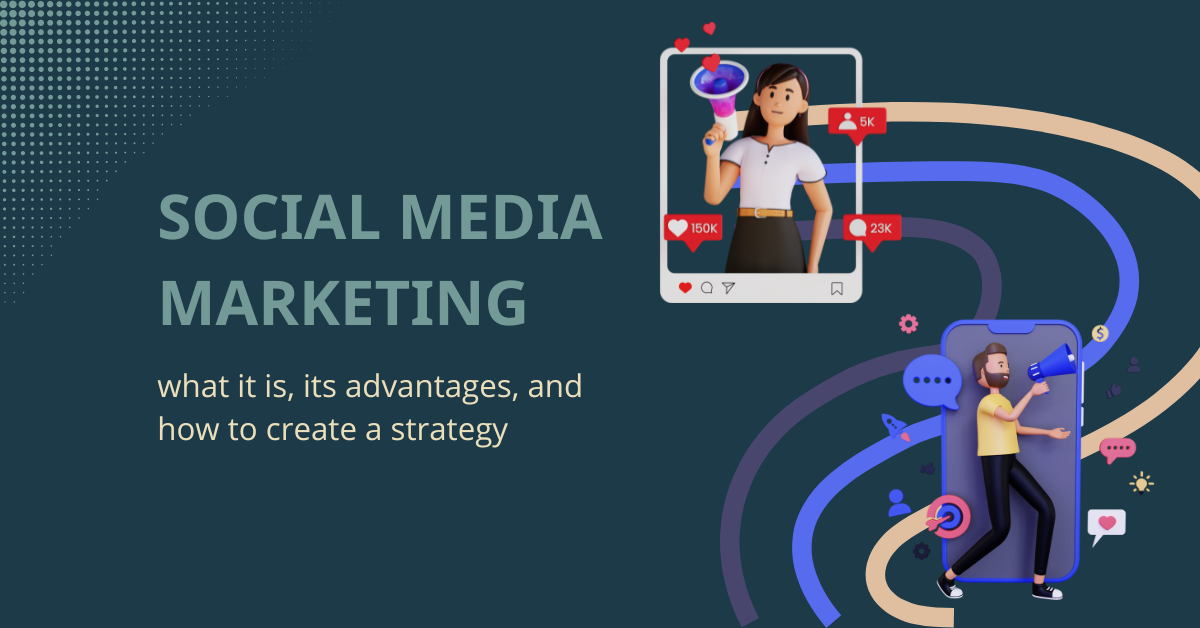
Social Media Marketing (SMM) is a form of digital marketing that involves the use of social media to reach and engage with a target audience.
Due to its widespread use, this marketing strategy is now a very effective way for companies to interact with their customers and increase brand awareness.
–What is Social Media Marketing?
Social media marketing is based on the use of communication channels such as Facebook, Instagram, Twitter, LinkedIn, and YouTube to promote products and services.

This type of digital marketing includes the development of a strategy, the creation of content suitable for various social networks, and the analysis of performance to improve ongoing marketing activities.
– Social Media Marketing vs. Social Media Advertising
Social media advertising differs from social media marketing because it uses paid advertising to promote products and services on social media. Social media marketing, on the other hand, leverages organic communication channels of social networks, such as sharing posts and interacting with users.
– Factors to Consider for a Good Social Media Marketing Plan
To create an effective social media marketing strategy, it is important to consider various factors, including:
- Business objectives: Establishing business goals for social media marketing activities, such as increasing website traffic, generating leads, or increasing sales.
- Target audience: Defining the target audience for the social media marketing campaign, in order to create targeted and suitable content for a specific audience.
- Choice of social networks: Selecting the most suitable social networks for the social media marketing campaign based on the target audience and the type of content desired to be shared.
- Content creation: creating engaging and valuable content for the target audience, using images, videos, and texts.
- Performance analysis: monitoring the performance of social media marketing campaigns to improve ongoing activities and optimize results.
– From content to analytics: what social media marketing means
Social media marketing includes a wide range of activities, from creating suitable content for various social networks, to planning strategies, managing customer interactions, and analyzing performance.

It is important to use appropriate tools to automate the process of publishing and analyzing content on various social networks.
– Pros and cons of a social media marketing strategy
Like any marketing strategy, social media marketing has its pros and cons:
Advantages:
- Increase in engagement and interaction with the target audience: through social media, companies can create a stronger relationship with their audience and establish a two-way dialogue. This allows them to gather feedback on the products or services offered, improve the customer experience, and increase customer loyalty.
- Increase in website traffic and improvement in search engine ranking: by sharing quality content on social media, it is possible to attract traffic to the company’s website and improve its search engine ranking. In addition, links to the company’s websites in social media posts can generate new business opportunities.
- Greater brand visibility: social media allows companies to expand their visibility and reach a wider audience. In addition, thanks to the available targeting options, it is possible to reach specific categories of the audience and increase the effectiveness of their communication.
Disadvantages:
- Reputation risks: social media marketing campaigns can be counterproductive if the content is offensive or inappropriate.
- Dependency on social media platforms: companies can be vulnerable to the policies of these platforms and their changes, which could cause a reduction in the organic reach of their campaigns.
- Costs: although social media marketing can be cheaper than other forms of advertising, costs can still increase depending on the scope of the campaigns and the type of content published.
Examples of social media campaigns:
There are many examples of successful social media marketing campaigns, including:

- Coca-Cola – “Share a Coke”: Coca-Cola created a campaign in which Coca-Cola bottles were personalized with common names, encouraging people to share a Coca-Cola with a friend with the same name. The campaign generated a 2% increase in Coca-Cola sales in the United States.

- Old Spice – “The Man Your Man Could Smell Like”: Old Spice created a campaign that made a viral video in which actor Isaiah Mustafa introduces himself as “the man every man would like to be”. The campaign led to a 107% increase in Old Spice sales.

- Airbnb – “Live There”: Airbnb created a campaign that encouraged people to “live” in their favorite places through the experience of a local host. The campaign led to a 60% increase in long-term bookings on Airbnb.
– Tools for social media marketing: how to choose the right ones for your strategy
There are many tools available to create and implement an effective social media marketing strategy.
A fundamental tool is an editorial calendar that helps you plan social media content in advance. There are numerous free and paid tools that allow you to create and manage an editorial calendar, such as Hootsuite, Sprout Social, Buffer, CoSchedule, and many others.
In addition, to create engaging and high-quality visual content, you can use graphic design tools such as Canva, Adobe Creative Cloud, and PicMonkey.
To manage and monitor social media presence, you can use analytics tools such as Google Analytics, Facebook Insights, and Twitter Analytics, which provide detailed data on interactions with your posts and social media presence.
– Post consistently
Social networks are a significant source of accurate consumer data, but also a freely accessible knowledge repository at any time.
Users go to social media to inform themselves, have fun, share ideas, and receive advice. That’s why it’s crucial for a company to communicate continuously with its audience. Otherwise, there’s a risk that the audience will start appreciating and sharing the competitor’s content instead of ours.
The most effective Social Media Marketing (SMM) strategies are those in which the company is ready to provide advice on how to choose and use the product to its full potential.
Sharing blog posts that address topics relevant to the company helps attract the audience’s attention and offers interesting ideas for updates. But it’s also important to give space to entertainment by posting memes, quizzes, and fun videos.
In conclusion, social media marketing can be an effective option for companies looking to increase their online presence and interact with their audience. However, it is important to create a well-structured strategy and consider both the advantages and disadvantages before launching a campaign.
Please let me know your thoughts on this story leaving a comment with suggestions for future topics.
Lascia un commento